


At Al Naqi, we care about more than just selling food—we want every bite to feel pure, nourishing, and rooted in traditi...
When people say saffron is the world's most expensive spice, they are not talking about just any saffron. They are talking about Kashmiri saffron—the deep crimson, intensely aromatic kesar that has been cultivated in the Pampore Valley of Kashmir for over a thousand years.
Whether you are buying saffron for health, for cooking, as a gift, or for your skin—this complete guide will tell you everything you need to know: what makes Kashmiri saffron special, the different types available, how to spot fake saffron, what a fair price looks like, and how to use it correctly.
Kashmiri saffron, known as Kesar in Hindi and Zaffran in Urdu, is derived from the red stigmas of the Crocus sativus flower. It is cultivated exclusively in the Karewa plateau of Kashmir—primarily in Pampore and Kishtwar—at an altitude of 1,600 to 1,800 meters above sea level.
This unique altitude, combined with Kashmir's cold winters, moderate summers, and naturally irrigated soil, creates growing conditions that exist nowhere else on earth. The result is a saffron with characteristics that simply cannot be replicated:
Key characteristics of Kashmiri saffron:
Deep maroon-red thread color—the darkest of any saffron in the world.
Higher crocin content (8.72%) vs. Iranian saffron (6.82%)—stronger color, flavor, and medicinal potency.
Thick, long threads with a distinctly earthy, floral aroma.
A slightly bitter, complex taste that is unmistakable in food.
GI (Geographical Indication) tag awarded in 2020, officially certifying its origin.
Mongra is the purest and most premium form of Kashmiri saffron. It consists exclusively of the red stigma tip of the saffron flower—the yellow style (tail) is fully removed during processing. This results in:
Mongra saffron is ideal for medicinal use, skin care, gifting, and as a premium cooking ingredient. At Al Naqi, our Kashmiri saffron is sourced directly from Pampore farmers and processed to Mongra grade standards.
Lacha saffron includes the red stigma attached to a portion of the yellow style. It is slightly less refined than Mongra but still an excellent product.
Lacha is the most commonly purchased variety among Indian households and is the best option if you want authentic Kashmiri saffron for everyday use without the premium mogra price.
Al Naqi Tip: If you are buying saffron as a gift or for health/skin benefits, always choose Mongra. For daily cooking, Lacha is an excellent and more economical choice.
Saffron contains crocin, crocetin, safranal, and kaempferol—potent antioxidants that protect your cells from free radical damage and reduce inflammation throughout the body.
2. Improves Mood and Fights Depression
Multiple clinical studies have shown that saffron supplementation can significantly reduce symptoms of mild to moderate depression. It is sometimes called 'the sunshine spice' for its natural mood-lifting properties.
3. Boosts Memory and Brain Health
Crocin, the active compound in saffron, has shown promising results in improving memory, learning ability and protecting against age-related cognitive decline. Some studies suggest benefits for Alzheimer's prevention.
4. Supports Heart Health
Saffron helps lower LDL (bad) cholesterol, prevents the buildup of arterial plaque, reduces blood pressure, and improves circulation—all of which contribute to better cardiovascular health.
5. Enhances Skin Health and Natural Glow
Kesar has been a staple of Indian beauty rituals for centuries. Applied topically or consumed, it brightens skin tone, reduces pigmentation and dark spots, evens out complexion, and gives a natural radiance. This is why it is a key ingredient in traditional ubtans and face masks.
6. Improves Digestion
Saffron soothes the stomach lining, reduces bloating and acidity, and promotes healthy digestion. It has traditionally been used to treat stomach ailments and intestinal spasms.
7. Benefits for Pregnant Women
In Ayurveda, saffron milk (kesar doodh) is traditionally recommended for pregnant women. It is believed to improve mood, support digestion, aid better sleep, and promote healthy fetal development. Always consult a doctor before use during pregnancy.
8. Natural Anti-Inflammatory
Saffron's active compounds suppress inflammatory pathways in the body, making it beneficial for conditions like arthritis, joint pain, and inflammatory skin conditions.
9. Supports Eye Health
Crocin in saffron has been shown to protect retinal cells and may slow the progression of age-related macular degeneration — one of the leading causes of vision loss in older adults.
10. May Help Manage Blood Sugar
Early research suggests saffron may help improve insulin sensitivity and lower blood sugar levels, making it potentially beneficial for people managing diabetes. More research is ongoing.
Drop 4-5 saffron threads into a cup of warm (not boiling) water. Real Kashmiri saffron will slowly release a deep golden-yellow color over 5-10 minutes, and the threads themselves will remain red-orange even after releasing color. Fake saffron turns the water red immediately, and the threads turn white.
Rub a few threads between your fingers. Genuine saffron leaves a yellow-orange stain on your skin that takes time to wash off. Fake saffron either leaves no stain or a red stain that washes off instantly.
Real Kashmiri saffron has a complex, earthy, slightly honey-like aroma that is unmistakable. Fake saffron either has no smell or smells artificial and chemical.
Chew a strand. Authentic saffron has a distinctly bitter taste followed by a sweet aftertaste. Fake saffron tastes of nothing or tastes sweet immediately — a sign it has been sugar-coated.
If saffron is being sold at suspiciously low prices—below Rs 250 per gram—be very careful. Genuine Kashmiri saffron cannot be produced cheaply due to the extremely labor-intensive harvesting process. Approximately 170,000 flowers are needed to produce just 1 kg of saffron.
The safest way to guarantee authentic saffron is to buy from a trusted Kashmir-based source like Al Naqi, where saffron is sourced directly from Pampore farmers and sold without middlemen.
Any saffron priced significantly below these ranges should be treated with caution. At Al Naqi, we price our saffron fairly — reflecting genuine Pampore-origin quality without the premium markup of large retail brands.
Always bloom saffron before adding it to food. Crush 5-7 threads and soak in 2-3 tablespoons of warm water or milk for 15-20 minutes. Then add the liquid (not just the threads) to your dish. This releases the full color and flavor.
Kashmiri Pulao and Biryani—add bloomed saffron to the rice
Kheer and desserts—mix into warm milk
Kesar doodh (saffron milk)—5 threads in warm milk before bedtime
Shahi paneer, korma, and rich curries
Mix 3-4 threads of saffron in raw milk or rose water overnight. Apply to face in the morning. Regular use over 4-6 weeks visibly brightens skin and reduces dark spots.
Saffron milk before bedtime is the most traditional and effective way to consume saffron for health benefits. Use 5-7 threads in warm milk with a pinch of cardamom and a teaspoon of Acacia or Solai honey.
Kashmiri saffron has a higher crocin content (8.72% vs 6.82%), darker red color, thicker threads, and a more complex earthy aroma. Iranian saffron dominates in volume, but Kashmiri is universally considered superior in quality.
30mg per day (about 5-7 threads) is considered safe and effective for most adults. Do not exceed 1.5g per day as very high doses can cause side effects.
Small culinary amounts (5-7 threads in warm milk) are traditionally considered safe and beneficial. However, medicinal doses should be avoided. Always consult your doctor before use during pregnancy.
You can buy 100% authentic Kashmiri Mongra directly from Al Naqi at www.alnaqi.in —sourced from Pampore, Kashmir, with delivery across India.
Kashmiri saffron is not just a spice—it is a heritage, a tradition, and one of nature's most extraordinary gifts from the valley of Kashmir. Whether you are using it to elevate your cooking, nourish your skin, or support your health, there is simply no substitute for genuine Pampore-origin kesar.
At Al Naqi, we are proud to bring this precious spice directly from the saffron fields of Kashmir to homes across India—pure, authentic, and fairly priced.
Shop Pure Kashmiri Saffron at www.alnaqi.in — Free delivery across India | 4.8 Rated | Directly from Pampore Farmers
At Al Naqi, we care about more than just selling food—we want every bite to feel pure, nourishing, and rooted in traditi...
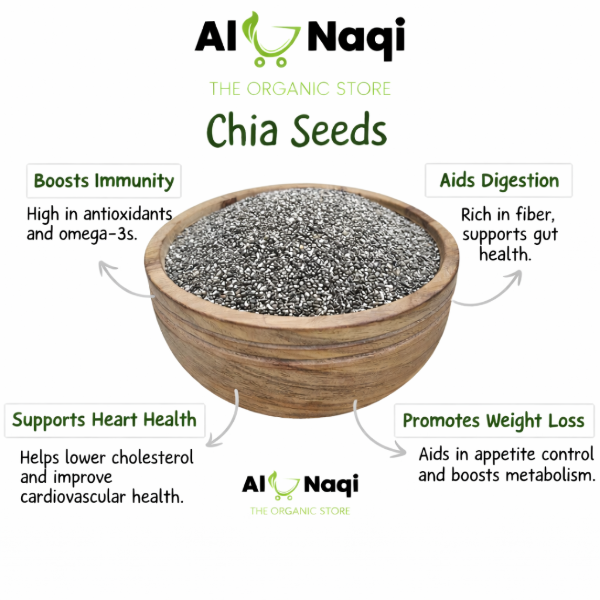
Shop premium Chia Seeds from Al Naqi Dry Fruits – rich in fiber, omega-3, protein, and antioxidants. A natural superfood...
At Al Naqi, we are committed to providing you with the highest quality organic fruits, grown with love and care. Our fru...